The Declining Trend of Cotton

Syed Hamza Ali
The Declining Trend of Cotton
Heavy seasons, heavier burdens
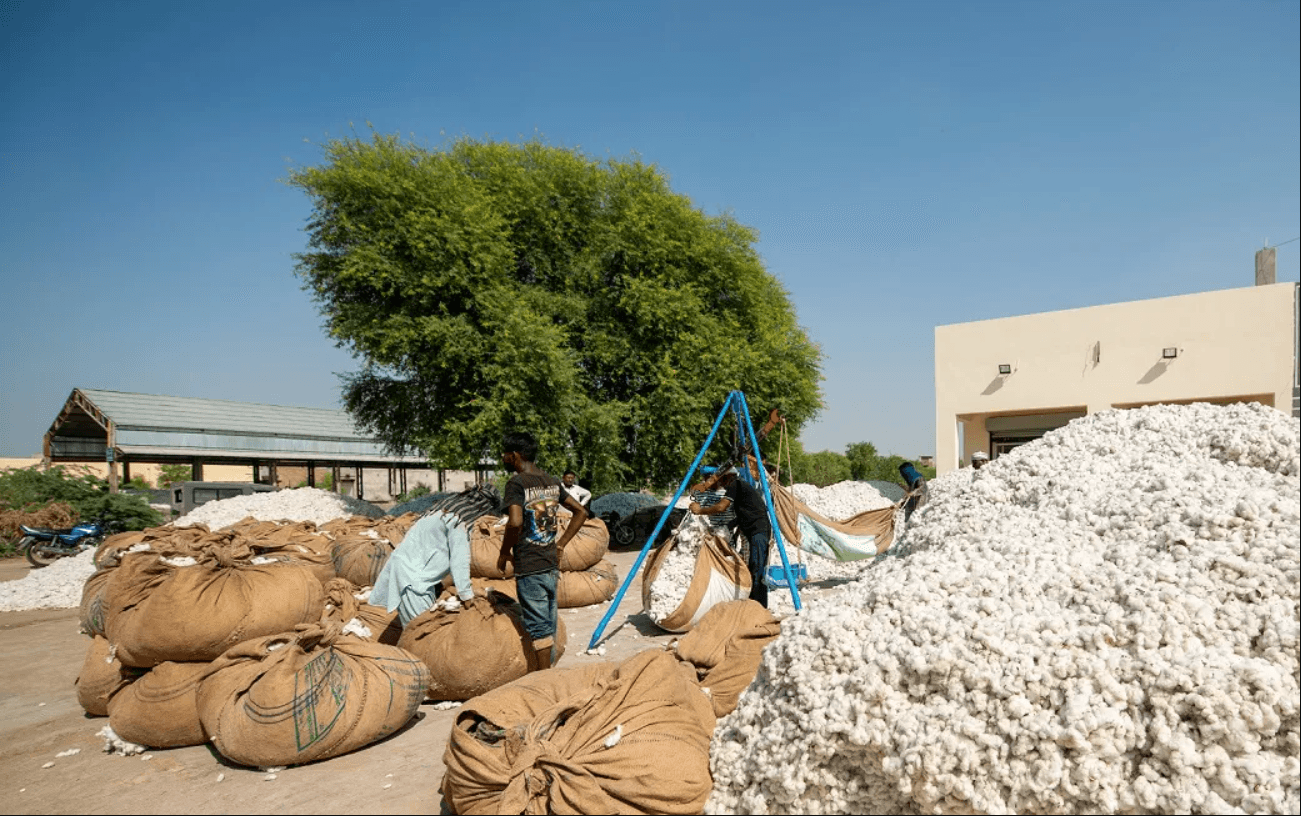
This season has been confusing. Local cotton prices are sliding, fields in parts of Punjab and Sindh were hit by floods, and when roads reopened a wave of cotton reached the mandis at once. On some days,the arrivals in major mandis such as Karachi, Multan, Faisalabad, Bahawalpur, and Rahim Yar Khan have been overflowing. An increase in arrivals has led to a declining price trend. Without a dedicated platform providing this necessary commodity information, many growers accept whatever offer is on the table.
Let’s walk through what has been happening, why the cotton price trend 2024–2025 in Pakistan goes below international averages, and what practical steps sellers can take. Where helpful, we connect local reality to global benchmarks like US Cotton futures and to verified arrivals data.
Falling prices: Dismal local and global signals
Pakistan’s cotton industry references the Karachi Cotton Association rate today (KCA spot). On Oct 14, 2025, the KCA cut its official spot by Rs 100 to Rs 15,000 per maund, with analysts calling the tone “bearish” despite decent trade volumes. Same-day field quotes reported Punjab cotton Rs 14,700–15,300, Sindh Rs 14,800–15,300, and Phutti rate today generally Rs 6,800–8,000 per 40 kg depending on location and moisture.
Global benchmarks are not giving much support either. ICE Cotton No. 2 futures (the main US cotton cent quote) have been treading water in the mid-60s cents per pound in October, with the December 2025 contract around ~65¢/lb during the first half of the month. Industry coverage also noted a dip below 65¢ before a slight recovery. ICE’s own board shows nearby contracts clustered in the 62–66¢ range through mid-October.
Mills in Pakistan usually watch for international cotton prices and compare it to local rate. When the ICE cotton futures vs Kapas Pakistan rates parity is tight, domestic buyers resist paying a premium.
Therefore, a quick parity check always helps: convert US cotton cent/lb → Rs/maund using the day’s interbank FX. Business Recorder’s currency table showed the interbank USD/PKR ≈ 281 on the date of Oct 20, 2025. At roughly 65¢/lb that implies parity near Rs 15,000 per maund before quality and freight adjustments—very close to the KCA spot noted above.
The bottom line being that both international and local signals are soft across the board and the price doesn’t seem to have an upward pull in the near future.
A Flood with no Ark
Heavy monsoon flooding has damaged fields, delayed picking, and disrupted transport in key belts. In our previous article, we detailed evacuations in Punjab and widespread crop losses in August–September; later reports continued to show damaged cotton stands in districts like Kabirwala.
Yet arrivals surprised to the upside as waters receded. The Pakistan Cotton Ginners Association (PCGA) reported 3.04 million bales by Sept 30, 2025—~49% higher year-on-year—and 3.80 million bales by mid-October, up ~22% YoY as the early surge moderated. Dawn’s coverage through September likewise flagged a strong rebound in receipts despite floods.
Essentially, the floods have only done real damage in specific areas, but the timing of field access and road reopening pushed arrivals & volume today cotton markets into concentrated windows. When too many trucks reach the ghalla mandis on the same day, cotton prices weaken even if there are decreased arrivals in the future.
With limited on-site storage and urgent cash needs for the next crop, many smallholders sell into the latter half of the day. That pattern shows up in KCA spot moves (e.g., Rs 15,000/maund) and in daily district quotes for Sindh cotton rates today and Punjab cotton rates today—narrow bands in buyer’s favor when arrivals peak.
Research on Pakistan’s cotton price fluctuations points to thin working capital, reliance on informal credit, and timing mismatches as classic triggers for forced / distress sales. Dawn’s summary of an ILO study earlier this year described how supply-chain pressures and weak bargaining power translate into hurried transactions at the scale—especially for small farms.
No Fail-safes and More Loss
Pakistan lacks a farmer-friendly futures or options tool for cotton. Meanwhile, the world trades US Cotton on ICE in 50,000-lb lots, priced in cents per pound, with transparent volume and open interest (AP’s daily futures briefs reflect active participation). Domestic ginners and mills can reference ICE, but most growers sell spot. The result is a cotton spot vs futures price difference that farmers cannot easily manage—so when ICE slips or arrivals crowd the floor, local lint cotton and Phutti can drop within days.
The overall tone is bearish given the environment of the local markets, therefore quality differentials matter more. Contamination remains a money-loser. Pakistan has long battled polypropylene and trash mixing; State Bank analysis and trade press repeatedly cite the discount it creates. This season, PCGA announced a crackdown on adulteration (e.g., raids in Sanghar), aiming to restore a contamination-free cotton premium along the chain. Even older policy notes and media reports show how buyers are willing to pay for clean lots when quality is verifiable.
How Zarai Mandi Helps.
Zarai Mandi is built for exactly this problem: uneven information and timing. We are at our core a price discovery service on WhatsApp that pushes daily mandi prices, arrival volumes, quality grades, and global references to your phone. Key features include:
- Ghalla Mandi Daily Rates: real-time prices from major markets nationwide.
- Daily Trading Updates: intra-day moves and opportunities.
- Global Commodity Prices: to benchmark local lint against US Cotton.
- Volume & Quality Metrics: arrivals, moisture, and grade notes.
- Verified Trader Network: more buyer/seller options to avoid same-day distress selling.
- Market Trend Reports: weekly/monthly summaries to help with timing.
We offer insights for Cotton & By-products alongside other crops, with updates rolling from 9:30 a.m. to 6:30 p.m. in dedicated WhatsApp groups. Transparent pricing plans are listed publicly, and subscription/WhatsApp contact details are straightforward.
What this changes for you
- You can compare Sindh vs Punjab rates in minutes and decide whether to roll the truck today or tomorrow.
- You see arrivals & volume today cotton markets Pakistan as they build, instead of hearing about it after bids fall.
- You can check ICE cotton futures vs Pakistan rates parity and spot a weak day before dispatch.
- You can push for the contamination-free premium when your lot deserves it.
Even a Rs 200–400/maund improvement by waiting out a crowded day or by targeting a buyer who pays for staple length adds up quickly for small lots.
While Cotton in Pakistan is concentrated in Punjab and Sindh, demand signals travel far. Buyers in The Peshawar Valley—including Mardan and its Ghalla Mandi network—keep an eye on lint and by-products (oilseed cakes, seed). If your immediate mandi is flooded with arrivals, a verified buyer in a nearby hub may offer a steadier bid. You can contact us to help you in these trying times! We’re here every step of the way.