Maize: Pakistan's Poultry Ichor

Syed Hamza Ali
Maize: Pakistan's Poultry Ichor
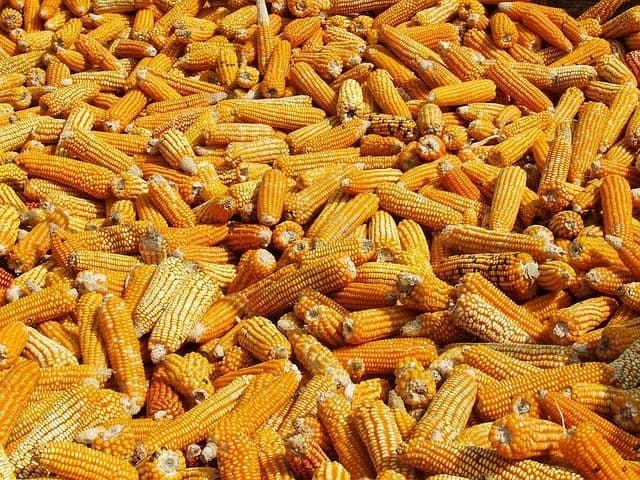
In the last five years, maize has become the ‘veritable ichor’ of Pakistan's poultry sector, valued at over $10 billion/anually. With production centered in Central Punjab, the Maize and Millets Research Institute (MMRI), Sahiwal has developed local, heat-tolerant maize hybrids, such as YH-1898 (launched in 2015) and YH-5427 (crossed in 2015, tested widely from 2017 to 2019, and subsequently approved by the Punjab Seed Council).At the national level, the maize market continues to face multiple challenges in FY25: production provisionally stood at 9.0 million tonnes, cultivated on ~1.588 million hectares—marking the second straight annual decline, about 7.6% lower than FY24’s 9.74 million tonnes. This slowdown resulted from lower cultivated area and reduced profitability in preceding years, impacting the maize price in Pakistan.
Why Maize Crowded Out Cotton in the Belt
The Central Cotton Belt in Punjab has had a foundational shift towards maize farming. In our previous article, we talked about the declining trend of cotton. Today, we will dissect the maize economy in Pakistan, the maize (Makai) rate in Pakistan today, and how maize has historically altered the commodity market.
Hybrid maize is the first-generation (F1) seed made by crossing two distinct inbred parents; the F1 shows hybrid vigor (higher, more reliable performance) versus the parents. In the last decade, cotton has struggled: recurring pest pressure (whitefly, pink bollworm) and climate stress, alongside weak/volatile prices, have squeezed profits—prompting growers to shift acreage to maize. In contrast, hybrid maize offered growers in central Punjab and parts of Khyber Pakhtunkhwa something cotton struggled to guarantee: repeatable yields plus cashable, contract-demand from feed mills and starch plants. Pakistan’s Official Economic Survey 2023–24 confirms the crop’s entrenched status—1.6 million hectares under maize production with ~9.8 million tonnes harvested. In FY2024–25, planners trimmed maize output estimates to ~8.24 million tonnes, citing area/yield pressure.
Two Seasons, Two Payouts — How Maize Runs Year-Round
Pakistan grows maize in two seasons:
- Kharif (summer/autumn): Sow July–August; harvest October–December. (Govt crop calendar.) Yields are generally lower than in spring; in KP, kharif yields have often stayed under ~2 t/ha.
- Rabi/Spring (winter–spring): Sow late January–late February; harvest May–June. (Punjab Agriculture advisory; trials at Faisalabad used 22 Jan–22 Feb sowings.) Spring usually yields more—Punjab’s spring maize commonly reaches ~6–8 t/ha.
Beyond climate and irrigation, several structural features enable Pakistani farmers to harvest maize virtually year-round in Punjab and KPK:
- Geography creates multiple sowing windows: Punjab’s irrigated plains and KP’s mid/high hills allow staggered spring–autumn planting, so fields stay busy across months.
- Short-duration types fit easily: Silage maize (≈75–90 days) lets farmers take 2–3 crops between February and October; sweet/baby corn trials around Peshawar show good results on multiple planting dates.
- Flexible rotations: Studies from Punjab show workable maize sowing in both spring and late summer within rice–wheat areas—after wheat/forage/potato and before rice—without disrupting the system.
- Strong seed and input pipeline: Dozens of registered seed companies operate, and hybrid adoption has driven big yield gains—so seed and advice are available when windows open.
- Post-harvest and processing support. Growing use of shellers/mechanization and large processors (e.g., Rafhan Maize) helps handle wet or off-season arrivals, lowering risk for farmers.
The Feed–Poultry Engine Behind Demand
Maize is the main energy grain in Pakistan’s commercial poultry, where feed rations commonly include about half maize by weight, and in broiler starter diets, maize alone supplies roughly 65% of the birds’ metabolizable energy.
Therefore, mills anchor their buying programs around maize arrivals and quality. When there’s plenty of dry, clean maize, feed mills can put more of it in the formula, hit higher energy targets, keep the lines running smoothly, and birds grow well. If maize is wet or has aflatoxin risk, mills must dry it, dilute it, or add binders—feed energy slips, pellets suffer, and birds need more feed per kilo of weight gain (a worse feed conversion ratio, i.e., more feed for the same growth). That’s why mills pay a premium for dry, low-aflatoxin maize: it protects performance and keeps throughput steady. The United States Department of Agriculture (USDA) now projects maize consumption rising with the poultry rebound, which keeps the maize market liquid and investable—from drying and shelling at mandis to year-round contracts for large integrators. In short, nutrition science, mill economics, and recent policy experience all point the same way: healthy poultry margins depend on reliable maize supply and the quality of the maize.
Vietnam: From Breakthrough To Bottleneck (And Back?)
FY2023–24 was the breakout year. Pakistan shipped a record volume of maize, with export receipts hitting about $421 million; Vietnam emerged as a headline buyer alongside Malaysia, Korea, and Oman as exporters leveraged a good crop and sharp pricing.
The run ended abruptly in mid-2024. From July 2024, Vietnamese plant health authorities repeatedly intercepted Pakistani consignments, whose quality was compromised due to the Khapra beetle pest (Trogoderma granarium). By September 2024, exports to Vietnam had fallen to near-zero and then stopped entirely, a collapse the Commerce Ministry later documented in a letter: shipments to Vietnam slid from $26.81m in July to $7.73m in August and $0.23M in September, with no exports thereafter. The letter attributes the halt to a self-imposed restriction by the Department of Plant Protection (DPP) of Pakistan, after the pest detections.
In late March 2025, DPP issued SOPs for maize exports—but the ministry flagged practical snags, including clauses that appeared to require double fumigation with methyl bromide despite earlier Agricultural Pesticides Technical Advisory Committee (APTAC) guidance, and a dedicated-warehouse requirement that would be difficult for smaller shippers. In parallel, press reports from July 2024 had already warned that repeated interceptions in Vietnam (and some in Malaysia) were putting the trade “in doldrums”, with DPP capacity constraints cited as a risk.
The damage showed up in the numbers: Q1-FY2025 maize exports plunged ~87%, with volumes dropping to ~53,700 tonnes from ~419,000 tonnes a year earlier; Afghanistan temporarily became the top residual buyer as many destinations, including Vietnam, recorded zero.
Since April–May 2025, remedial work has picked up. Trade Development Authority Pakistan (TDAP) led trainings and provincial seminars that informed exporters and growers on khapra control, clean storage, container hygiene, and aflatoxin management, while DPP has emphasized bringing procedures in line with IPPC standards. These steps, plus consistent pre-shipment fumigation/certification and warehouse pest-monitoring, are the practical path to restoring flows to Vietnam/Malaysia. In the medium term, Pakistan is also probing China as a structured outlet under a maize export protocol—an option that will still demand higher, more predictable biosecurity and quality compliance, similar to other sesame and other commodity exports to the country.
Seeds Changed The Game: Local Hybrids Of The Last Decade
Hybridization is the process of crossing two different parent lines to produce a hybrid seed that has extra vigor, higher yield, and uniform plants. The Ministry of National Food Security and Research (MNFSR) Year Book 2022–23 explicitly lists Pioneer maize seeds—notably P1429 (spring) and P4040 (autumn)—as major hybrid cultivars in recent seasons. Public breeders also pushed competitive material; YH-5427, developed at the Maize & Millets Research Institute (Sahiwal, Punjab), is repeatedly documented as high-yielding and heat-tolerant. The practical edge for B2B buyers: hybrid choice shapes maturity windows, test weights, and moisture curves by district.
Seed calendars mirror summer sowing calendars. P1429 is targeted to spring sowing; P4040 to mid-June–late August for autumn, with a ~110–115-day maturity—useful for planning dryer capacity and truck turns. Even with superior genetics, weather and water still set the floor. Government and USDA series together frame the band: ~9.8 MMT in FY2023–24 (ESP), a trimmed 2024/25 profile in FAO/USDA outlooks, and a rebound forecast to ~9.6 MMT in 2025/26 assuming average moisture and area. In practice, the belt trades the spread between those pillars.
Conclusion
Pakistan’s maize economy is big and tightly linked to poultry: about 65% of local maize goes into poultry feed, making farms and feed mills the main buyers. Two maize seasons (spring and autumn) and varied ecology—from Punjab’s plains to KPK’s hills—support steady production. Hybrid seed adoption, including public-bred MMRI hybrids YH-1898, YH-5427, and YH-5482, has lifted yields and reliability. Farmers have also shifted land from cotton to maize for better, more consistent returns.
In FY24, maize exports reached about $421 million, with Vietnam and Malaysia among the top buyers. But export growth depends on quality: shipments have faced pest interceptions (e.g., khapra beetle) and toxin/moisture concerns, pointing to the need for tighter post-harvest and compliance practices.