Kunri: Pakistan’s Spice Heart

Syed Hamza Ali
Kunri: Pakistan’s Spice Heart
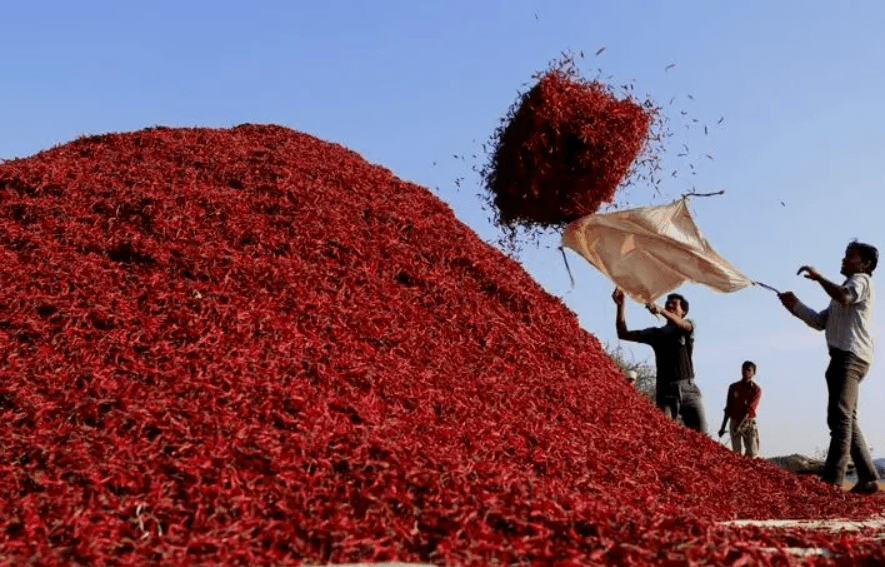
The moment one steps inside Asia’s largest chilli market, for the uninitiated, the smell profile overwhelms them. Eyes stinging, nose burning, you only see a sea of vibrant red being sorted into bags, loaded onto trucks and being auctioned off.
This is the famous Hybrid chilli variety. The pride of this region and the country. Kunri is a sub-division of the Umerkot district in Sindh. Its neighbouring district is Tharparkar - one of Pakistan’s more arid and drought-persistent regions for the past two decades.
Kunri is special for many reasons. Not only is it the spice hub of Pakistan, but it is also one of the few actual ghallah mandis of the province, delivering 75-85% of the country’s national chilli output. Situated at the tail-end of Sindh’s canal network, this sub-division is famous for its chilli varieties. Namely, Dandicut (Laal Mirch), Masi, Desi, and Nageena - a recently developed variety through the Pak-China seed collaboration initiative.
Kunri Chilli Market remains central to the region's livelihood; however, its geographic advantages are under pressure from heatwaves, declining canal flows, failing groundwater and an increase in crop losses due to shifting climate patterns. In this article, we will highlight the importance of the region, its market, its people, the weather and how we can do our part in making sure this area thrives and does not buckle under the current pressures.
Ghalla Mandi vs Small Commodity Markets?
Step into any ghalla mandi and you’ll feel the difference: broad concrete yards, weighbridges and stacks of burlap. These places are built for volume and for moving tonnes of commodities at a time. They are centralized hubs where price is found in loud auctions and where storage and regulation sit on paper. And upon a closer look, you’ll find that Arthis and commission agents hold the strings that make the mandi dance. For many smallholders, that means quick sales at thin margins, opaque prices and little bargaining power.
On the other hand, village bazaars and tehsil markets are smaller, closer to the fields, and easier for a farmer to reach with a donkey cart or a pickup. Their advantage is access — farmers sell without long hauls, which allows transaction costs to fall. They have some visible weak spots as well: narrow lanes, no cold rooms, no proper grading, and spotty transport that fragments supply and keeps produce from fetching top prices or meeting export standards.
The result of such fragmentation is a system of trade-offs where mandis bring scale and formal services but risk sidelining the producer; local markets give farmers a foothold but rarely the tools to climb higher. Fixing such a problem isn’t about picking winners — it’s about knitting the broken links. By strengthening rural infrastructure, rolling out metered storage and grading at source, and promoting public–private commodity platforms such as Zarai Mandi so farmers can access finance, price information and bulk buyers.
Chilli Varieties in Pakistan
While Kunri’s agri-trade remains overwhelmingly centred on red chilli, it is also home to other varieties. The mandi is best known for its prized Dandicut (Laal Mirch) — favoured for drying and powdering — alongside local varieties such as Masi and Desi, and newer, researched strains (Nageena, Kunri-I) introduced through Pakistan–China seed collaboration to lift yields and colour intensity.
Chilli arrivals are set by the seasons as picking usually begins in mid-summer and, depending on planting dates and the weather, can push into August–September. That reduces the amount of produce, labour and drying activity into a few intense months and shapes every post-harvest practice.
Extreme heat, erratic monsoon patterns and episodic flooding repeatedly interrupt harvest windows and drying, producing crop losses and quality downgrades that ripple through household incomes and regional trade. Recent reporting and field observations have tied heatwaves and flood events to sharp yield drops and damaged harvests around Kunri, underlining the climatic fragility of one of Asia’s important chilli hubs.
Chilli is not the only commodity that gets traded here. After peak chilli seasons, the mandi keeps moving through trade in other regional crops, such as sesame and maize and also engages in a lot of processing work that sustains livelihoods.
How Kunri is losing its Spice?
Kunri’s soil is a patchwork of sandy loam and heavier clays that sit at the tail-end of Sindh’s canal network. A geographic position that once made the district near-perfect for red chilli farming. Warm, well-drained days and a predictable monsoon window used to let the chilli pods ripen evenly and dry cleanly, producing the uniform, fiery red fruit buyers prize.
Those advantages are wasting away as field reports from Kunri record recurring heatwaves with daytime highs topping 45°C. The heat scorches vines, triggers flower drop and yields undersized, discoloured pods that fall short of premium and export grades. Water shortfalls compound the damage. Umerkot’s crop relies on timely Indus-system canal deliveries and on pumped groundwater — both now unreliable as upstream flows weaken and aquifers are drawn down — leaving farmers scrambling to irrigate during critical growth stages. The result has been sharp declines in output in some areas, often in the 30–40% range, a loss that hits smallholders and the whole Kunri mandi directly.
Climate instability also widens post-harvest risks. Irregular rains and compressed drying windows force producers to sun-dry chillies on the ground or in makeshift spaces, exposing crops to fungal spores and raising aflatoxin and mycotoxin risks — the very reasons consignments are rejected at export gates. Rising temperature and moisture variability make hygienic drying and controlled-environment processing not luxuries but necessities.
Protecting Kunri’s chilli economy will require practical fixes: smarter water accounting and fairer distribution, investment in drying and storage infrastructure, and on-the-ground extension services that help farmers adapt planting and harvest routines to a hotter, less predictable climate. The region’s reputation depends on acting before years of hard-earned prestige are lost.
Buyers are knocking — but quality blocks the door
The global appetite for chilli oil, powders and pastes is rising fast — fuelled by the globalisation of Sichuan heat, the spread of Korean gochujang, Latin American sauces, and a broader shift toward spice-forward processed foods. That surge plays to Pakistan’s strengths: our chillies already move to more than fifty destinations, with long-standing buyers in Sri Lanka, Saudi Arabia and the UAE and fresh interest opening elsewhere. This is an export story waiting to be scaled.
Yet two stubborn problems repeatedly undo consignments: aflatoxin contamination and MRL (maximum residue limit) breaches. Aflatoxins — carcinogenic mould toxins from Aspergillus species — flourish when pods are dried on bare earth, exposed to dust and moisture, or stored in old jute sacks that shelter spores. Those practices remain common across major production belts such as Kunri, where high heat, unexpected rains and prolonged drying cycles magnify fungal growth. A single lapse in post-harvest hygiene can turn a successful harvest into a rejected shipment.
MRL violations follow a parallel logic. Erratic or poorly timed pesticide applications, limited farmer training on pre-harvest intervals, and weak access to safer plant-protection products push residue levels above the strict thresholds set by the EU, North America and parts of the Middle East. Importers treat these breaches severely: routine arrival testing can mean immediate rejection, direct financial losses for exporters, and lasting reputational harm to Pakistan’s supply chain. In repeat cases, markets respond with temporary bans, tighter inspections and higher transaction costs — outcomes that quickly chill buyer confidence.
Expanding exports will not come from acreage alone but from fixing structural weaknesses from farm to port. Practical measures — raised or solar-assisted dryers, clean drying platforms instead of ground-drying, breathable food-grade storage, and farmer training on correct pesticide use and withholding periods — cut contamination risk dramatically. Pair those with modern dehydration centres, accredited testing labs and traceability systems, and Pakistan can capture a far larger share of the lucrative chilli-ingredients market. The demand is real; aligning everyday handling and compliance with the hygienic standards of high-value markets is the work that will turn potential into durable export success.
Conclusion:
Kunri has everything it needs on paper — varieties bred for the place, a mandi that aggregates volume, and buyers who want spice and oil. The problem is not demand; it is quality control and resilience building. If stakeholders act now by investing in dehydration and processing near the Kunri mandi, subsidising drip irrigation, expanding farmer training and building testing capacity, Pakistan can lock in higher-value exports and reduce rejections. Without these steps, buyers will continue to favour suppliers who can guarantee dryness, traceability and safety.
Pakistan’s spice heart can flourish with targeted investment and practical policy choices; it can again beat for global markets, without them, that heartbeat could slow, and a historic export advantage will be at risk.