Khairpur: The International Khajoor Market

Syed Hamza Ali
Khairpur: The International Khajoor Market
Introduction
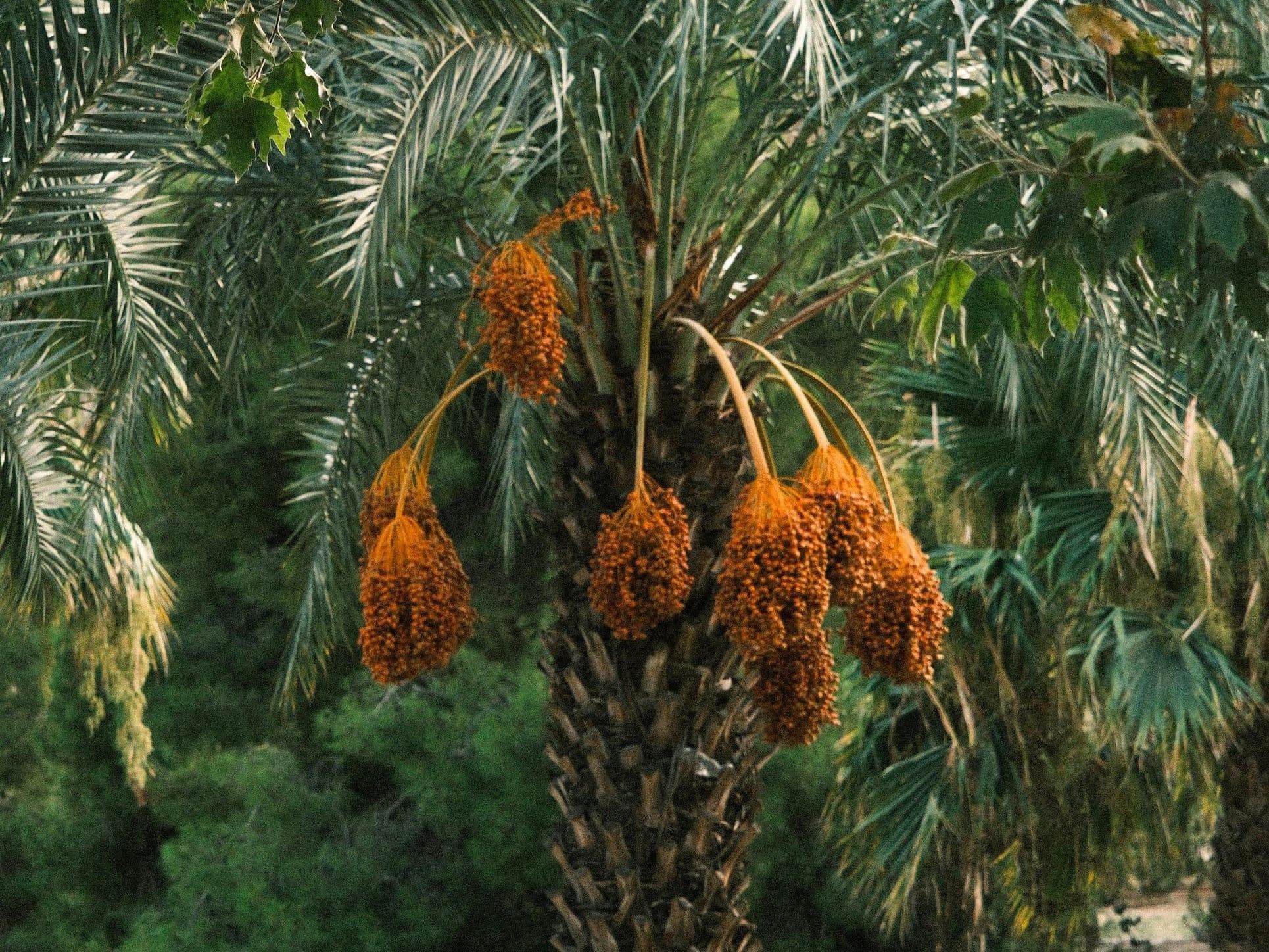
The oppressive heat of June–July in Sindh is part burden, part blessing. Travellers on the N-95, headed to Khairpur, are welcomed by rows of date palms punctuating an otherwise semi-arid landscape. Alongside mango and guava orchards, these palms mark Khairpur as a diversified agricultural district. Khairpur’s date economy is a regional source of life for many. Labour arrives in waves from Sindh, Punjab and Balochistan as orchards ripen. The season usually overlaps with monsoon rains, and that combination shapes how growers harvest and sell.
Located on the left bank of the Indus, Khairpur (formerly Khairpur Mirs) was the capital of the Talpur state. It’s famous Kot Diji fort sits near agricultural tracts that now host more than 33,000 hectares of date palms. Khairpur’s climate and soil have made it the dominant date producer in Pakistan. National estimates place Pakistan as the world’s fifth-largest date producer, despite a 40% output loss YOY; Sindh supplies roughly half of the country’s output, and 85% of Sindh’s production comes from Khairpur. The principal commercial variety is Aseel Khajoor, a workhorse for industry.
Exports to India: Production, Routes and Bans.
Under favourable weather, a mature date palm in Khairpur can yield between 100–120 kg of khajoor per year. Growers, however, often convert a large share of that yield into chuhara (dried dates) because rain can rapidly damage the soft fruit. This trade-off explains why only a nominal percentage of Khairpur’s output reaches international shelves as fresh, high-value table dates.
The processing chain is partly traditional and partly modern. Many orchard owners lease their groves to contractors who manage harvest and initial processing. There are efforts to add washing, dehydration and grading lines, but investment has been uneven. Cold storage and dehydration plants have been proposed or partially built in Khairpur’s Special Economic Zone (SEZ), yet operational problems and stalled utility connections have limited impact so far.
Historically, a significant portion of Pakistani chuhara finds buyers in India, where they are used in religious rituals and as an ingredient in traditional sweets. Local growers report that export channels have shifted in recent years. Restrictions and market dynamics mean that much of the dry date trade now moves via third-country hubs such as Dubai before reaching Indian buyers.
Growers point to two structural problems: first, an absence of high-value branding that would position Pakistani table dates (as opposed to commodity dry dates) in premium markets; second, regulatory frictions and tariffs that complicate direct exports. While Aseel Khajoor is widely used in the agro-industry, it has not been marketed as a premium table fruit in the same way as foreign varieties like Majool.
Hence, exporters and traders often route consignments indirectly to India, adding cost and reducing returns for growers. For Khairpur to reclaim direct access and better prices, the district needs improvements in value addition, standardisation and bilateral trade facilitation.
Varieties, markets and consumer choice
The district is home to a variety of Khajoors. The softer, sweeter types such as Irani Mazafati Khajoor and certain Mabroom Dates Khajoor fetch higher retail prices as table fruit because shoppers pay for texture, moisture and flavour. Firmer, dryer varieties, notably Sukri Khajoor (also seen as Sukhri Khajoor) and Dhakki Dates, move as bulk chuhara into confectionery, industrial kitchens and seasonal demand in neighbouring markets. Mid-range varieties like Zahidi Dates Khajoor are versatile: sold both retail and processed, depending on harvest conditions.
On the supply side, mandi hubs remain the price-setting venues. Large consignments arrive at Sukkur Khajoor Mandi and other district mandis, where commission agents and wholesale buyers grade, auction, and redirect loads to Karachi, Lahore or export channels. For urban buyers, Khajoor Market Karachi and wholesale districts are where traders break bulk for retailers and institutional buyers.
Retail channels have diversified. Traditional grocers and fruit stalls still dominate everyday trade, but branded packs and supermarket chains increasingly sell value-added, hygienically packed lines aimed at premium buyers. E-commerce and speciality importers supply niche items such as the ajwa khajoor (an imported, high-value type), which means consumers now check the ajwa khajoor price in Pakistan alongside local rates.
Aseel or Sukri bought at mandi rates will be significantly cheaper per kilo than vacuum-packed soft dates sold in supermarkets. Practical buying tips: bulk purchasers should source from mandi hubs for the best khajoor price in Pakistan; retail buyers should look for clear grading, origin labels and moisture specification when they Buy Khajoor in Pakistan.
Challenges that shape policy needs
Khairpur has a lot of strengths, but the district’s upside is blunted by a handful of solvable policy failures. Water is the clearest example: ageing canal stretches and recurring siltation steal capacity, raise seepage and force growers into uncertain irrigation schedules. De-silting and targeted lining of critical reaches are not glamorous projects, but without them, orchard yields and post-harvest planning remain hostage to supply variability.
Energy and fuel present a second, immediate bottleneck. Processing units and cold stores cannot run on promises; they need stable electricity and reliable gas. Where the grid cannot be upgraded quickly, pragmatic interim fixes such as vetted solar systems or dedicated gas loops for priority units should be treated as part of any investment in the harvest so plants can move from paper to production.
Quality control and export certification are the third. Smallholders and contractors must access affordable laboratory testing, traceability tools and training in hygiene standards (SPS/HACCP); otherwise, consignments will keep being routed through intermediaries and value will leak away. Mobile testing labs, subsidised certification for cooperatives and simple grading centres at mandi hubs are low-hanging fruit.
Lastly, climate risk rewrites harvest decisions every monsoon. Early-warning services, seasonal advisories and access to crop-damage insurance would reduce the reflex to convert table fruit into low-value chuhara. Practical policy means stitching these threads together: coordinated canal works by irrigation authorities, conditional subsidies from provincial industry departments for utility upgrades, and federal trade facilitation that rewards certified, traceable shipments.
Conclusion: from volume to value
Khairpur’s position at the centre of Pakistan’s date economy is not an accident. It is the outcome of agro-ecology, long-standing farming knowledge and a district-wide dependence on palm groves. But being the country’s natural capital of Khajoor Pakistan is no longer enough in a market where buyers reward consistency, branding and traceability. Global importers, including those in India, now judge suppliers by their ability to deliver uniform grades, food-safe processing and shelf-ready packaging.
That shift poses both a challenge and an opportunity. Khairpur’s growers and contractors have traditionally excelled at volume, especially in chuhara-grade dates. The next step is capturing value beyond the farm gate. Modern dehydration units, colour-sorting lines, metal detection, and retail-grade packing are supposed to be the minimum entry ticket for competitive exports. As international buyers diversify beyond traditional sources in the Gulf and North Africa, Pakistani producers with upgraded facilities will find room to carve out space in mid-tier and premium categories.
In practical terms, any attempt to revive direct exports to India must rest on reliability — predictable moisture levels, uniform grading, and documentary compliance. If Khairpur aligns processing capacity with smart marketing, the district can shift from being a bulk supplier to owning its identity in international date aisles.
The potential is already there; what remains is turning raw output into a branded, export-ready product.